
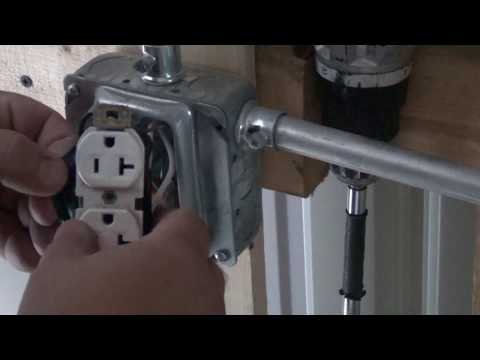
A tone generator can help identify a wire or cable when the corresponding circuit has been safely de-energized. In this video, Handyman Problem Fixer answers viewer questions about tracing a dead circuit, and the description notes a 120-volt, 20-amp branch-circuit demonstration. Electrical work requires particular caution: switching off a breaker is not proof that conductors are safe.
Watch the Original Video

Watch the video on YouTube. This is a written companion using the original description and general reference information rather than a complete transcript.
What a tone generator does
A generator places a signal on a suitable conductor and a compatible probe detects that signal along the route. Many ordinary data-cable toners are not designed for use on live mains wiring. Match the tool’s voltage and application rating to the work; never attach an unapproved low-voltage tracer to energized household conductors.
The power-off requirement
The original video specifically emphasizes keeping all power off before performing its test. A qualified person should identify all feeds and sources, including backfeeds, and verify absence of voltage with a correctly rated tester before attaching a tracer. Breaker labels and a noncontact detector alone are not sufficient proof.
Know the limits
A signal can couple into adjacent wires, metal conduit, and connected loads. Cable layout and construction affect tracing accuracy. A traced route is not confirmation that all conductors in a box are de-energized, and it does not eliminate the risk of hidden live wiring.
When a professional is the right choice
If the panel labeling is uncertain, circuits appear shared or backfed, wiring is damaged, or you are not trained and equipped to test for absence of voltage, use a qualified electrician. Do not open service panels or expose connections simply to imitate a demonstration.
Product links from the original video
Affiliate disclosure: As an Amazon Associate, I earn from qualifying purchases. These are the links originally shared with the video; linked items and availability can change. Check the specifications, fitment, and manufacturer instructions before ordering.
For related demonstrations, visit the Handyman Problem Fixer video library.


0 Comments