
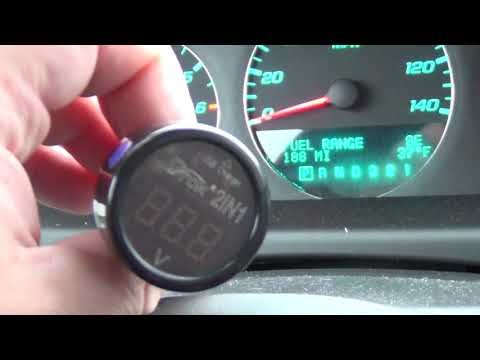
This quick-tip video uses a plug-in voltage adapter as an easier way to get an electrical-system reading without opening the hood. The creator points viewers to a more comprehensive multimeter video and a battery load-test video because a quick voltage reading cannot establish overall battery health.
Watch the Original Handyman Problem Fixer Video

View the original YouTube demonstration. This written companion uses the video description together with general maintenance guidance; it is not a substitute for the manufacturer’s instructions.
Understand where the adapter reads
Accessory-outlet meters measure voltage at the socket they are plugged into, not directly at the battery posts. Fuse, wiring, socket condition, and the vehicle’s charging-control strategy can affect readings. Some outlets turn off with the ignition and cannot give a reading while parked.
Interpret a voltage reading cautiously
Many healthy rested 12-volt lead-acid batteries read in the mid-12-volt range, but readings depend on state of charge, temperature, and surface charge. A running engine can show a higher voltage when the alternator charges, although smart charging systems may intentionally vary output.
When to perform a proper battery test
A voltage meter alone cannot reliably diagnose a weak battery or low cold-cranking capacity. If starting performance is poor or the battery drains repeatedly, use the manufacturer’s recommended battery test, inspect connections, and assess the charging system.
Further troubleshooting
For direct measurements and context, see our battery and alternator multimeter guide, alongside the original load-test video.
Product links from the original video
Affiliate disclosure: As an Amazon Associate, I earn from qualifying purchases. These links were shared with the original demonstration; product selections and listings may have changed. Check compatibility, current specifications, and relevant safety instructions.
For more how-to videos, visit the Handyman Problem Fixer video library.




0 Comments